
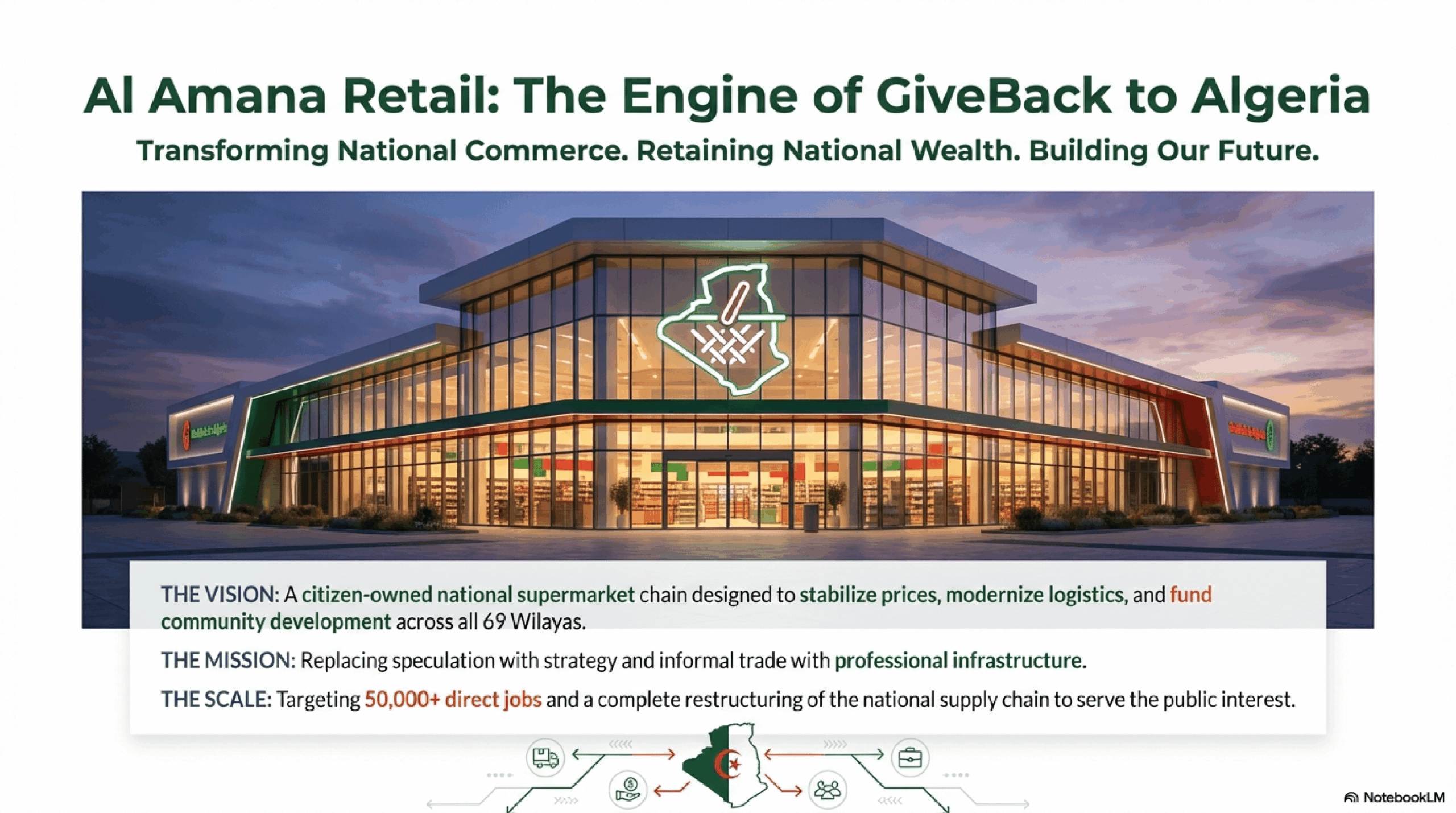
1) Overview
The Chain of Supermarkets project is a flagship part of GiveBack to Algeria (GBTA). Its purpose is to modernise Algeria’s retail distribution by shortening supply chains, cutting unnecessary intermediaries, and creating a reliable route from farms and factories to supermarket shelves using professional logistics and modern stock management.
2) Planning figures (indicative)
These figures are presented on our project page as part of an early planning model and will be refined through field studies:
Funding allocation: 12.5%
Total allocation: €413,437,500
Estimated scale: 50 supermarkets
Average cost per project: €8,268,750
3) Why this matters
Prices and availability are often shaped less by production cost and more by distribution realities:
Too many middle layers and repeated mark-ups
Weak storage capacity, especially cold chain
Inconsistent supply, variable quality, and price volatility
Limited data-driven stock control
A structured supermarket network helps stabilise supply, improve quality consistency, and make pricing fairer for families while protecting producer margins through direct procurement.
4) The operating model: direct, fair, accountable
Our approach is built on:
Direct sourcing from farmers and manufacturers
Clear quality standards and predictable purchasing schedules
Fair commercial terms that reward reliability and quality
Faster movement of goods from source to shelf
5) National backbone: stores plus distribution and cold chain
A supermarket chain only works when the logistics are stronger than the storefront:
Dry, chilled, and frozen storage
Reliable transport operations
Regional Distribution Centres (RDCs) connected to store clusters
Reduced waste, better shelf availability, and safer handling of perishables
6) Technology that improves affordability and reliability
Stock management systems to reduce gaps and over-ordering
Better route planning and delivery scheduling
Refrigeration and preservation standards that protect quality and reduce spoilage
7) Expected impact
For households: more consistent availability of essentials, clearer quality, and more competitive pricing.
For producers: stable demand through direct contracts and improved margins through fewer intermediaries.
For Algeria’s economy: jobs across retail, warehousing, transport, maintenance, and quality control, plus lower food waste and higher professionalism across the sector.
8) A practical rollout pathway
Ground studies: demand, site selection, supplier mapping, compliance standards
Pilot supermarkets connected to one regional logistics backbone
Regional expansion with disciplined cold chain coverage
National scaling aligned with population density and road corridors, aiming for coverage across all 69 wilayas
9) Governance, transparency, and public-interest safeguards
Because this project touches daily life, we commit to:
Robust procurement rules and conflict-of-interest prevention
Supplier selection criteria and quality assurance
Regular reporting and audits
Asset lock principles within the GBTA model, ensuring assets and profits remain dedicated to public benefit and reinvestment
10) Get involved
Whether you are a farmer, manufacturer, logistics specialist, IT professional, finance expert, legal contributor, or volunteer, you can help build a distribution system that is modern, fair, and transparent.
#GiveBacktoAlgeria